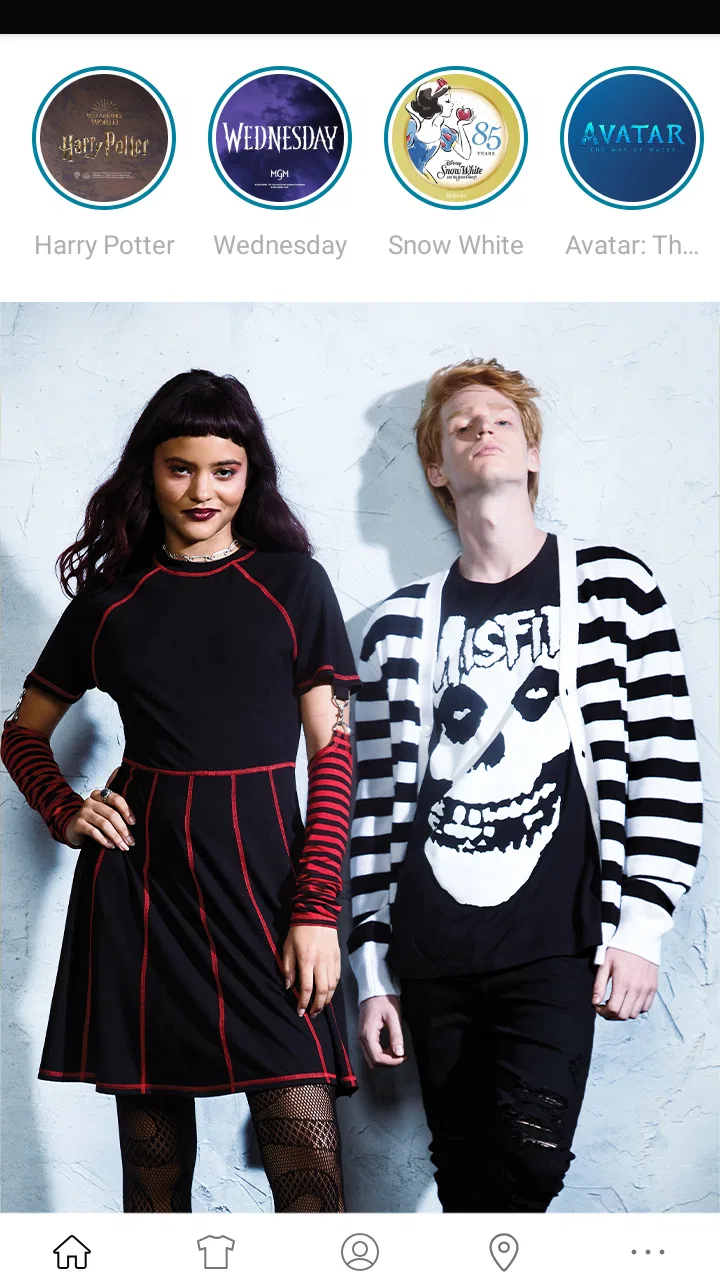
Hot Topic: Pop Culture Fashion
- 4.0
- Rating
- 1.00M
- Installs
- Free
- Price

 Analysis by App-foxy
I came away from Hot Topic: Pop Culture Fashion thinking of it less as a general shopping utility and more as a focused browsing space for people who already know the kind of fandom merchandise they want. The app brings Hot Topic’s music, pop-culture clothing, accessories, and collectible-focused catalog into a mobile format, with Funko releases given particular attention. My overall view is positive: it is convenient when I want to explore themed products from my phone, but it is not the best choice for someone looking for a broad, neutral marketplace or the fastest way to compare every possible seller.
The app is free to use and belongs squarely in the shopping app category. It was developed by HOTTOPIC INC, and its stated age rating is Everyone, which makes the basic browsing experience suitable for a wide audience. It has been available since February 16, 2017, and the current version is 2025.SS-1.1.2. That long presence matters to me because this is not a newly assembled storefront trying to prove that mobile shopping is useful; it is an established extension of a recognizable retail brand.
What the Hot Topic app does well in everyday shopping
The clearest strength is focus. When I open a general marketplace, I often have to filter through unrelated sellers, inconsistent product photography, and listings that use similar words for very different items. This app starts from a narrower identity: music-inspired fashion, pop-culture merchandise, and collectibles associated with Hot Topic’s audience. That makes casual discovery more enjoyable, especially when I am shopping for something connected to a favorite series, artist, character, or fandom rather than searching for a plain everyday item.
You May Also Like

 Blood Strike: 2.5 Anniversary
Blood Strike’s Loadouts Turn Every Drop Into a Tactical Gamble
A close look at Blood Strike’s custom loadouts: how fast access to signature weapons reshapes its battle royale rhythm, rewards preparation, and narrows the gap between fights.

 Pandora - Music & Podcasts
Pandora’s Music Is Easy to Start, but Harder to Recover
Pandora’s strength is its low-effort path from a seed to a station. Its weak spot is how much confidence it asks you to place in connection, setup, and quiet recovery.

 8 Ball Pool
 Is Built on Rivalries, Rematches, and Routine
A close look at the rivalries, rematches, shared routines, and unanswered safety questions that turn a quick pool match into a persistent mobile community.

 Samsung Music
’s Quiet Strength Is Playing What You Already Own
Its reach comes less from spectacle than from dependable access to a personal library. That simplicity is both the app’s strongest retention engine and its ceiling.

 AccuWeather: Weather Radar
AccuWeather Review: A Quick, Clear Forecast for Everyday Decisions
For everyday plans, the best forecast is the one you can understand quickly. AccuWeather makes rain timing, radar, and local conditions easy to act on, with a few trade-offs.

 Hill Climb Racing
Why Hill Climb Racing Still Turns Crashes Into One More Run
A tiny car, a bumpy hill and one more upgrade: Hill Climb Racing keeps resurfacing because its simple chaos makes every near-miss feel personal.
More From Our News Desk



I also like the way the app suits browsing sessions that begin without a precise shopping list. A friend might mention a new show, a band-themed gift, or a character they love, and I can explore the catalog for ideas instead of trying to invent a search phrase that perfectly describes the present. This is one of the less obvious reasons to use a retailer-specific app: the store’s identity narrows the possibilities, but that same limitation can make inspiration easier.
For a planned purchase, I would use it slightly differently. I would first search for the exact franchise, artist, or product type, then compare the available designs rather than scrolling through everything. This approach reduces the temptation to buy the first appealing item and helps me notice differences between graphic styles, accessory types, and collectible formats. The app works best when I treat it as both a catalog and a visual mood board, not simply as a replacement for a checkout page.
Its audience is clearly reflected in the product mix. Someone looking for officially licensed pop-culture clothing or a Funko item will probably find the app more relevant than a conventional department-store shopping app. The catalog’s theme also makes it useful for gift planning. If I know the recipient’s fandom but not their exact size or preferred clothing style, browsing accessories and collectibles can reveal safer alternatives to apparel.
That gift use case is particularly practical. Imagine I need a birthday present for a friend who collects character merchandise but I do not know whether they would wear a graphic shirt. I can use the app to move from clothing into smaller fandom items or collectible releases, keeping the theme while lowering the risk of choosing the wrong fit. I would still check the item details carefully before ordering, but the browsing process gives me more useful options than a generic search for “pop culture gift.”
The app also benefits from being mobile when I am away from a computer. I can browse during a commute, while waiting for an appointment, or while discussing gift ideas with someone in person. That may sound ordinary, but shopping for fandom merchandise is often conversational: a friend remembers a character, searches for it, and wants to see possibilities immediately. A dedicated app makes that interaction feel more direct than opening several unrelated marketplace pages.
Another strong point is the balance between familiar categories and discovery. The Hot Topic name sets an expectation around alternative fashion and entertainment culture, while the merchandise selection gives me room to move between apparel, accessories, and collectibles. I do not have to decide in advance whether I am shopping for clothing or a figure. That flexibility is useful when the goal is to find something that feels personal rather than simply functional.
The app’s reception also suggests that it has reached a substantial shopping audience. It has more than a million installs, an average rating of 4.0, around fourteen thousand ratings, and roughly three thousand nine hundred written reviews. I do not treat those figures as proof that every shopper will have a smooth experience, but they do indicate that the app is established enough to be part of many customers’ regular retail habits.
Why the focused catalog is more useful than it first appears
A generic store app usually wins on breadth, but breadth creates work. If I am looking for a licensed design, I want to spend my time judging the item rather than verifying whether the listing is actually connected to the fandom it references. A retailer centered on officially licensed music and pop-culture merchandise gives the browsing experience a clearer starting point. That does not remove the need to read descriptions, but it makes the search feel less random.
My first practical tip is to browse by the recipient’s interest before browsing by product type. Searching for “hoodie” or “shirt” can produce an overwhelming visual stream, while starting with a favorite character, series, or music theme helps me build a smaller shortlist. Once I know the relevant collection, I can decide whether apparel, accessories, or a collectible makes the most sense.
My second tip is to use the app for comparison within the Hot Topic catalog, not as the sole source of price research. If I am buying a common category such as a shirt or figure, I would still compare the final cost and availability with other legitimate retailers. The advantage here is relevance and themed selection; a broad marketplace may offer more sellers or different pricing. The right choice depends on whether I value a curated fandom catalog more than maximum market comparison.
A third useful workflow is to separate discovery from commitment. I often save mental notes about designs that fit a person’s taste, then return later after checking size, color, and the total order details. Fandom shopping encourages impulse decisions because the products are emotionally recognizable. Taking a short pause is worthwhile, especially when I am buying clothing for someone else or choosing between several similar collectibles.
For Funko shoppers, the app’s emphasis on drops can make it a convenient place to keep an eye on new collectible possibilities. I would not assume that seeing a product means I should rush into a purchase. Collecting is a category where duplicates, character variants, and display space matter. I would first check whether the item fills a real gap in the collection or is merely attractive because it is currently prominent in the app.
The friction I would want buyers to consider
The same specialization that makes the app appealing can also make it feel narrow. If I want groceries, electronics, household supplies, or a wide selection of independent sellers, this is obviously not the right shopping tool. Even within fashion, the experience is aimed at expressive, fandom-driven clothing rather than understated basics. Someone who wants a plain jacket, office wear, or a broad range of everyday brands should use a general clothing retailer instead.
I also find that themed shopping can encourage browsing without a clear stopping point. The app is good at presenting items that trigger recognition, but recognition is not the same as value. A design can appeal to me because I love the source material while still being the wrong size, color, or type of gift. I recommend deciding on a budget and a product purpose before opening the catalog, particularly when browsing collectibles or several related apparel items.
Another limitation is that a mobile storefront cannot remove the uncertainty that comes with buying clothing online. I would pay close attention to the size information and product description rather than relying only on the images. A graphic may look different on a model than it does as a flat product image, and a familiar brand name does not tell me whether a particular cut will suit the recipient. For gifts, accessories and collectibles may be less risky than apparel when I cannot confirm fit.
The app is also less useful when my main priority is exhaustive comparison. A marketplace with many sellers may provide more alternatives for the same character or product category, while a specialist retailer gives me a more controlled selection. I see that as a trade-off rather than a defect. I would choose this app when I want Hot Topic’s particular style and licensed catalog; I would switch to a broader alternative when I need to compare sellers, materials, or prices across the whole market.
Shoppers who dislike visual browsing may find the experience less efficient than a simple search engine. The app is designed around products that are easy to recognize and explore, so it rewards curiosity. If I already know the exact item I want, I would search directly and avoid wandering through recommendations. If I do not know what I want, I would accept that discovery is part of the experience and set a time limit so browsing does not turn into an unplanned shopping spree.
It is also worth remembering that the app’s free price refers to accessing the app, not to receiving merchandise without cost. The actual purchase decision still depends on the individual item and the complete order details shown during shopping. I would review those details before confirming anything, especially when buying multiple pieces or a collectible that is intended as a gift.
Who should install it and who should skip it
I would recommend the app to fans who regularly shop for licensed music or pop-culture products and want a focused place to browse from a phone. It is especially suitable for people who enjoy alternative fashion, collect Funko products, or need fandom-themed gift ideas. The app is also a good fit for shoppers who prefer a retailer’s own catalog over sorting through listings from unknown sellers.
It makes sense for parents and friends shopping for younger fans as well, although I would still make the final choice based on the recipient’s interests and the item details. The Everyone age rating describes the app’s general suitability, not whether every product will match every person’s taste or wardrobe. A character-themed accessory may be a better choice than clothing when I do not know the recipient’s preferred fit.
I would be more cautious about recommending it to someone who rarely buys licensed merchandise. If the goal is simply to find the cheapest basic T-shirt, a standard clothing app may be faster. If the goal is to compare a product across many independent retailers, a marketplace is likely more useful. And if someone wants a minimalist shopping experience with no temptation to browse fandom collections, this app’s strongest feature may become its biggest distraction.
For me, the deciding question is not whether the app can replace every other shopping service. It cannot, and it does not need to. The better question is whether its focused catalog makes a specific shopping task easier. When I am looking for a recognizable fandom gift, a music-inspired item, or a collectible connected to a favorite character, the answer is usually yes. When I am shopping by price, material, or broad availability, I would look elsewhere first.
My final view after using it
Hot Topic: Pop Culture Fashion succeeds because it understands that fandom shopping is about identity as much as utility. I found it most enjoyable when I approached it with a theme in mind and used the catalog to compare possible gifts, apparel, accessories, and collectibles. The focused selection saves effort compared with a completely open marketplace, while the mobile format makes spontaneous discovery convenient.
Its weaknesses are equally clear. The app is not a universal store, and its browsing appeal can encourage purchases that are emotionally exciting but not especially practical. Clothing still requires careful attention to fit, and shoppers who want the lowest price or the widest seller comparison may prefer another service. Those are meaningful limitations, not reasons to dismiss it; they simply define the situations where this retailer-specific app is strongest.
With a 4.0 average from its ratings, the app has a solid user response without giving me a reason to ignore those trade-offs. I would install it if my shopping habits include licensed pop culture, music merchandise, or Funko collecting, and I would use it as a focused discovery and purchasing tool rather than my only marketplace. For the right fan, that focus is exactly the point. For everyone else, a broader shopping app will probably be more practical.
My recommendation is therefore specific: use it when the fandom matters, when you want Hot Topic’s particular style, or when a themed gift is more important than exhaustive comparison. Start with the recipient or franchise, narrow the choices before buying, and check the item details carefully. Used that way, the app feels purposeful instead of merely promotional, and it earns a place on the phone of anyone who regularly shops for pop-culture fashion and collectibles.
FAQs for Hot Topic: Pop Culture Fashion
01What is Hot Topic: Pop Culture Fashion?
Hot Topic: Pop Culture Fashion is the official shopping app for fans of pop culture merchandise, alternative fashion, music, anime, gaming, movies, and television. After exploring the app, I found that it combines product browsing with frequent themed collections, exclusive items, apparel, accessories, collectibles, and home goods. It is designed for users who want to discover fandom-inspired products and shop from a mobile device.
02What can I buy through the Hot Topic app?
The app offers a broad selection of products, including graphic T-shirts, hoodies, dresses, jewelry, bags, shoes, accessories, collectibles, room décor, beauty items, and gifts. Its catalog is organized around popular franchises, artists, bands, and alternative fashion styles. Product availability can change quickly, especially for limited-edition releases, so some items may sell out or disappear from the catalog without much notice.
03Does Hot Topic: Pop Culture Fashion offer exclusive or limited-edition products?
Yes, one of the app’s main attractions is access to exclusive merchandise and limited-edition collaborations. These products may be associated with anime series, games, films, bands, or other entertainment franchises and are often released in small quantities. In my experience, users should check sizes, colors, shipping details, and return conditions carefully because popular items can sell out quickly and restocks are not always guaranteed.
04Is it safe to purchase products through the Hot Topic app?
The app is intended to provide a mobile shopping experience connected to Hot Topic’s official retail service. Users can browse product information, add items to a cart, and complete orders through the available checkout process. Before paying, it is still sensible to verify the official app listing, review the final order total, and read the current shipping, privacy, payment, and return policies, since these terms may change over time.
05Are there any important things to know before downloading Hot Topic: Pop Culture Fashion?
Before downloading, remember that this is primarily a shopping and merchandise-discovery app rather than a game or social entertainment platform. You may need an internet connection to load products, prices, images, and account features. The app can also request permissions related to notifications or account activity. Check your device’s supported operating system, available storage, regional availability, shipping coverage, and the latest user reviews before installing.
Pros
- Wide selection of licensed pop-culture clothing and accessories.
- Frequent new collections tied to current movies
- shows
- and fandoms.
- Exclusive designs can appeal to dedicated franchise collectors.
- Gift options are easy to browse by fandom
- character
- or category.
- Store pickup may provide a convenient alternative to home delivery.
Cons
- Sizing and fit can vary noticeably between different brands.
- Popular limited items may sell out quickly after release.
- Some designs may feel too bold for everyday outfits.
- Shipping costs can reduce the value of smaller orders.
- Returns may be less convenient for online-exclusive merchandise.

Hot Topic: Pop Culture Fashion
Gallery